Where Central Banks Have Leverage

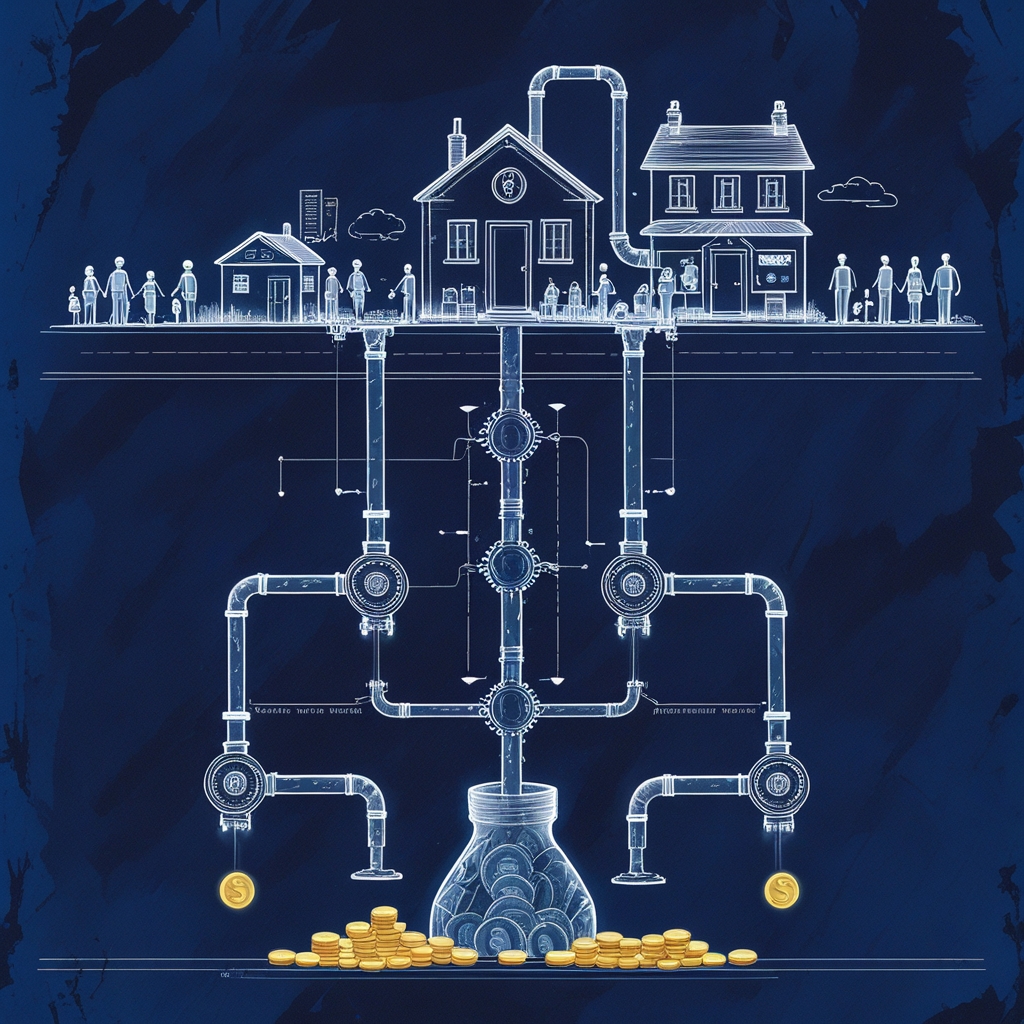
The money system is vast. Complex. Resistant to control. But it is not entirely beyond influence. There are points where pressure works. Where intervention changes outcomes. Where the system, despite its size and momentum, responds. And most of those points are controlled by central banks.
Central banks are not all-powerful. They cannot dictate what happens. They cannot force people to borrow or lend. They cannot set prices or determine asset values. But they have tools. Tools that shape the conditions under which everyone else operates. And when those tools are used well, they steer the system. Not perfectly. But enough to matter.
Let me show you where central banks have leverage.
The first and most visible tool is interest rates. The central bank sets a base rate. And that rate influences the rates that commercial banks charge when they lend. If the central bank raises its rate, borrowing becomes more expensive across the economy. Mortgages cost more. Business loans cost more. Credit cards cost more. And when borrowing costs more, people borrow less. Less borrowing means less money creation. Less money creation means less spending. And less spending slows the economy.
If the central bank lowers its rate, borrowing becomes cheaper. People and businesses take out loans. Money is created. Spending increases. The economy accelerates. This is the lever. Up to slow things down. Down to speed things up. And it works. Not instantly. Not perfectly. But it works.
The power of this tool comes from its reach. Every borrower in the economy is affected. Every business considering investment. Every household weighing a mortgage. Every bank deciding how much to lend. The interest rate filters through all of them. It does not control their decisions. But it shapes them. And when millions of decisions shift slightly in the same direction, the effect is large.
But the tool has limits. Lowering rates only works if people want to borrow. If confidence is low, if people are worried about the future, cheap credit does not help. They will not borrow no matter how low the rate is. This is what happened in many economies after the financial crisis. Central banks cut rates to near zero. And borrowing stayed weak. Because the problem was not the price of credit. It was the willingness to take on debt. The central bank could make borrowing cheap. But it could not make people want to borrow.
Raising rates also has limits. If rates go too high, borrowing stops entirely. Businesses cancel investments. Households default on loans. The economy does not just slow. It contracts. And contraction, once it starts, feeds on itself. So the central bank has to calibrate carefully. Too much, and it triggers a recession. Too little, and it fails to control inflation. The tool is powerful. But it is blunt. And using it well requires judgment. Judgment that is often wrong.
The second tool is forward guidance. This is communication. The central bank signals what it intends to do in the future. It says, we plan to keep rates low for the next two years. Or, we will raise rates if inflation exceeds our target. And those signals shape expectations. Expectations shape behavior. If people believe rates will stay low, they borrow now. If they believe rates will rise, they delay. The central bank is not forcing anything. It is influencing what people expect. And expectations, in a system driven by confidence, are powerful.
Forward guidance works when the central bank is credible. If people trust that the central bank will do what it says, the guidance matters. They adjust their behavior accordingly. But if credibility is lost, if the central bank says one thing and does another, the guidance becomes noise. People stop listening. And the tool loses its power.
This is why central banks guard their credibility fiercely. They communicate carefully. They avoid surprising markets. They explain their decisions. Because credibility, once lost, is very hard to rebuild. And without it, the central bank's influence shrinks.
The third tool is quantitative easing. This is what happens when interest rates are already at zero and the central bank wants to do more. It cannot cut rates further. So it does something else. It buys assets. Government bonds, mostly. Sometimes corporate bonds. Sometimes even stocks.
Here is how it works. The central bank creates money. Not physical money. Digital money. It credits its own account. And it uses that money to buy bonds from banks and investors. The sellers receive money. And because they now have money instead of bonds, they look for somewhere else to put it. They buy other assets. Stocks. Property. Corporate bonds. And those purchases push up the prices of those assets.
Higher asset prices make people feel wealthier. Wealthier people spend more. Businesses, seeing higher stock prices, find it easier to raise money. Lower bond yields make borrowing cheaper for governments and corporations. All of this stimulates the economy. Not through interest rates. But through asset prices and wealth effects.
Quantitative easing is controversial. Critics argue that it inflates asset bubbles. That it benefits the wealthy, who own most of the assets, while doing little for ordinary people. And there is truth to this. Asset prices do rise. And the people who own assets do benefit disproportionately. But the central bank's mandate is not to distribute wealth fairly. It is to stabilize the economy. And when rates are at zero and the economy is still weak, quantitative easing is one of the few tools left.
The fourth tool is reserve requirements. Banks are required to hold a certain amount of reserves. Cash or deposits at the central bank. Relative to the loans they make. If the central bank raises the reserve requirement, banks have to hold more. Which means they can lend less. Less lending means less money creation. The money supply contracts. If the central bank lowers the requirement, banks can lend more. The money supply expands.
This tool is powerful in theory. But in practice, it is rarely used. Because changing reserve requirements is disruptive. It forces banks to adjust their balance sheets quickly. And sudden adjustments can cause instability. So central banks prefer to use interest rates and quantitative easing. Tools that work more gradually. Reserve requirements are there. They provide a backstop. But they are not the primary lever.
The fifth tool is liquidity provision. During a crisis, when banks are struggling, the central bank can lend to them. This is the lender of last resort function. If a bank cannot borrow from other banks, it can borrow from the central bank. This prevents bank runs. It prevents the collapse of individual institutions from cascading into systemic failure. And it stabilizes the system.
The power of this tool is psychological as much as financial. Knowing that the central bank will step in if needed gives banks and depositors confidence. And confidence prevents the panic that causes runs in the first place. The central bank rarely has to actually lend large amounts. The promise that it will is often enough.
But the tool creates moral hazard. If banks know they will be rescued, they take bigger risks. Why not? The upside is theirs. The downside is socialized. So the central bank has to balance. Provide enough support to prevent collapse. But not so much that banks feel invincible. This is a difficult balance. And central banks do not always get it right.
The sixth tool is currency intervention. If the central bank thinks its currency is too strong or too weak, it can intervene in foreign exchange markets. It buys or sells its own currency to influence the price. If the currency is too strong, making exports uncompetitive, the central bank sells its currency and buys foreign currency. Supply increases. The price falls. If the currency is too weak, fueling inflation, the central bank buys its own currency. Demand increases. The price rises.
This tool works. But only to a point. Because foreign exchange markets are enormous. Trillions of dollars trade every day. A central bank, even a large one, has limited resources compared to the market. So intervention only works if the market believes the central bank is serious. If the market thinks the central bank is fighting a losing battle, it will bet against it. And the central bank will run out of reserves. So intervention is most effective when it is signaling intent. Not trying to overpower the market. But nudging it in a direction the market was already moving.
The seventh tool is macroprudential regulation. This is not a traditional monetary policy tool. But it gives central banks leverage over financial stability. Macroprudential tools limit how much banks can lend relative to the value of assets. They cap loan-to-value ratios on mortgages. They impose capital buffers that banks have to hold during good times so they have a cushion during bad times. They restrict lending to overheated sectors.
These tools are designed to prevent bubbles. To slow credit growth in areas where it is excessive. And they work. Not perfectly. But they reduce the risk of the boom-bust cycle becoming extreme. The challenge is political. Imposing restrictions during a boom is unpopular. People want to borrow. Banks want to lend. Politicians want growth. And the central bank, by tightening macroprudential rules, is the one saying no. That requires courage. And independence. And not all central banks have enough of either.
So here is where central banks have leverage. Interest rates, shaping the cost of borrowing. Forward guidance, influencing expectations. Quantitative easing, pushing up asset prices. Reserve requirements, controlling how much banks can lend. Liquidity provision, preventing bank runs. Currency intervention, stabilizing exchange rates. And macroprudential regulation, limiting excessive credit growth.
These tools are not magic. They do not control the system. But they shape it. They nudge it. They stabilize it when it threatens to spiral. And they give central banks more power than any other single actor in the money system. Not absolute power. But real power. Power to make the difference between a soft landing and a crash. Between contained inflation and runaway prices. Between stability and chaos.
But the tools only work when they are used well. When the central bank has credibility. When it acts early enough. When it is willing to make unpopular decisions. And when the problems it is trying to solve are within its capacity to address. Because there are problems central banks cannot fix. Structural unemployment. Inequality. Weak productivity growth. These are not monetary problems. They are real economy problems. And no amount of interest rate adjustment or quantitative easing will solve them.
Central banks can stabilize the money system. They can manage inflation and prevent financial collapse. But they cannot make the economy fundamentally healthy. They can buy time. Create conditions for recovery. But the recovery itself requires more than monetary policy. It requires investment. Innovation. Education. Infrastructure. Things outside the central bank's control.
The final article will show you a real example. A case where the money system broke. Where central banks intervened. Where the tools were used. And where we can see, clearly, what worked, what did not, and what the limits of central bank power actually are. Because theory is useful. But seeing the system in action, under pressure, is where understanding deepens.
And that is what the next article will do. Show you the machine breaking. And the attempts to fix it. And what those attempts reveal about how the money system actually works.